You Finished the Remodel First — Here's the Hidden Cost Sitting Under Your New Patio
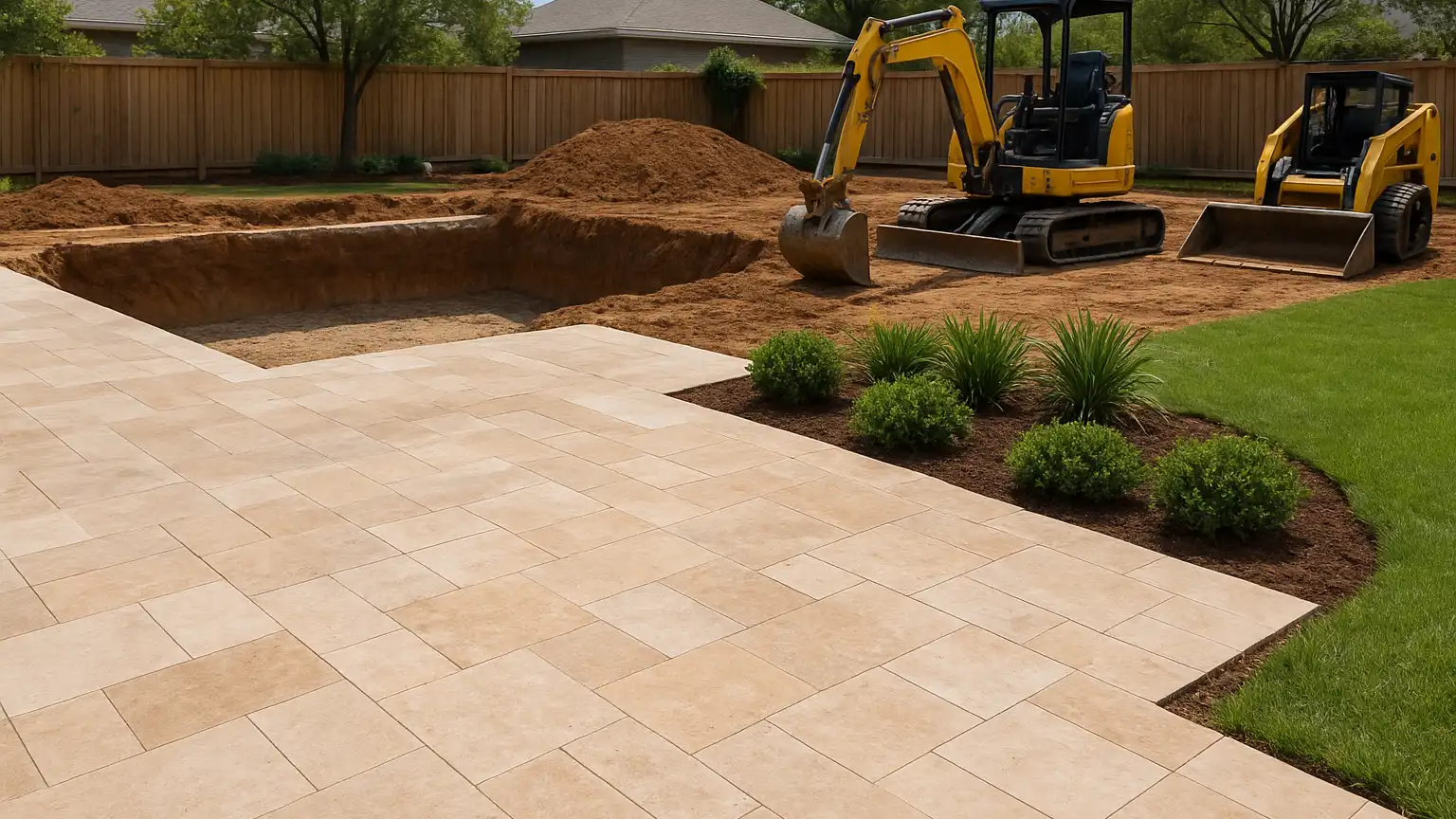
The pavers are set, the sod is green, and the excavator still needs a way in. Here's what that really costs you.

Part 2 of 3 in the series The Pool Nobody Warned You About: A Homeowner's Guide to Building Water Into a Remodel.
Part one looked at what happens when a pool crew and a remodel crew share the same driveway, and why the trench you dig once beats the trench you dig twice. This part picks up on the other side of that timeline: the remodel is done, the final invoice is paid, and now you want a pool.
That is a completely normal way to arrive here. Budgets run out, priorities shift, and sometimes a family does not decide they want a pool until they have spent one summer looking at the new patio and realizing something is missing. This series was developed with insights from Dolphin Pools, whose field experience with post-remodel builds shaped much of what follows, particularly around which parts of a finished yard can be saved and which cannot.
The honest version is this: building a pool after a remodel is not impossible, and it is not always dramatically more expensive. But the cost shows up where most homeowners never price it out. It hides under new hardscape, inside finished side yards, and in the gap between what a bid covers and what restoration actually costs.
The Bid Covers the Pool, Not the Backyard
A pool contract is priced around the pool: excavation, steel, plumbing, gunite or a shell, decking, equipment, startup. What it usually does not include is putting your yard back the way it was. Removing a section of new travertine is a line item. Sourcing matching travertine from the same dye lot two years later is your problem. So is the irrigation zone that gets cut, the sod that gets staged over, and the fence panel that comes out so a machine can pass.
Ask any bidder a blunt question early: what condition will the yard be in on the last day, and who pays to get it back to where it was? The answer separates a clean project from a surprise.
When it comes to hiring a quality carpet cleaner, it's important to note that not all carpet cleaners are the same. You'll find some that are cheap, and you'll find some that charge an arm and a leg. The key, is finding a carpet cleaner that you feel comfortable and can . To do this, we've listed the top factors to keep in mind when looking to hire a carpet cleaner.
What Usually Gets Demolished, and Why
Not everything in a finished yard is at risk. But certain elements sit directly in the path of a pool build, and no amount of careful planning saves them. Knowing the list ahead of time turns a shock into a budget line.
- Hardscape within the pool footprint plus a working margin. Crews need roughly three to five feet of room around the shell to form, shoot, and finish. That margin almost always eats more patio than homeowners expect.
- The access corridor. Whatever the machines drive over gets compacted or destroyed. Pavers can sometimes be lifted and reset. Poured concrete cannot.
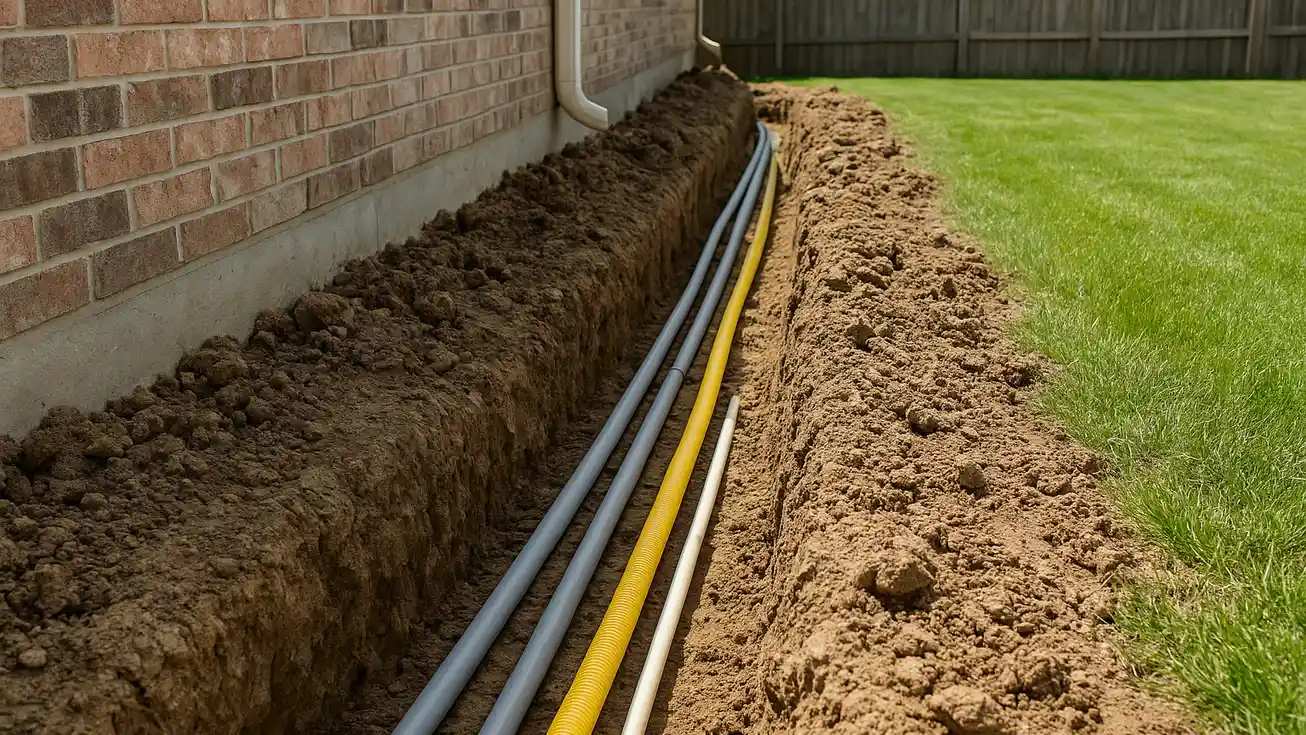
- Irrigation and low voltage lighting. New systems get sliced during excavation and trenching. Repair is cheap. Redesigning a zone layout around a pool is not.
- Mature plantings near the dig line. Root zones get cut, and plants that survive the first season sometimes fail the second.
- Fencing and gates. Sections come out for access and often need to be rebuilt anyway to meet pool barrier code.
- Drainage. A finished yard was graded to shed water a specific way. Drop a pool into it and that grading plan is no longer valid.
Drainage quietly does the most damage. A pool plus new decking changes how much water hits the ground and where it goes. If the remodel's grading assumed an open lawn that no longer exists, water finds the house. This is the same reasoning behind advice to plan the full site before you break ground, and it applies double when the site is already finished.
The Part Nobody Budgets For
Matching materials. Stone, tile, and pavers are produced in batches, and two years later the same product name does not mean the same color. Contractors who work in finished yards often recommend buying overage during the original remodel and storing it. If you did not, plan for either a visible seam or a larger replacement area to make the transition look intentional.
Access Is the Whole Ballgame
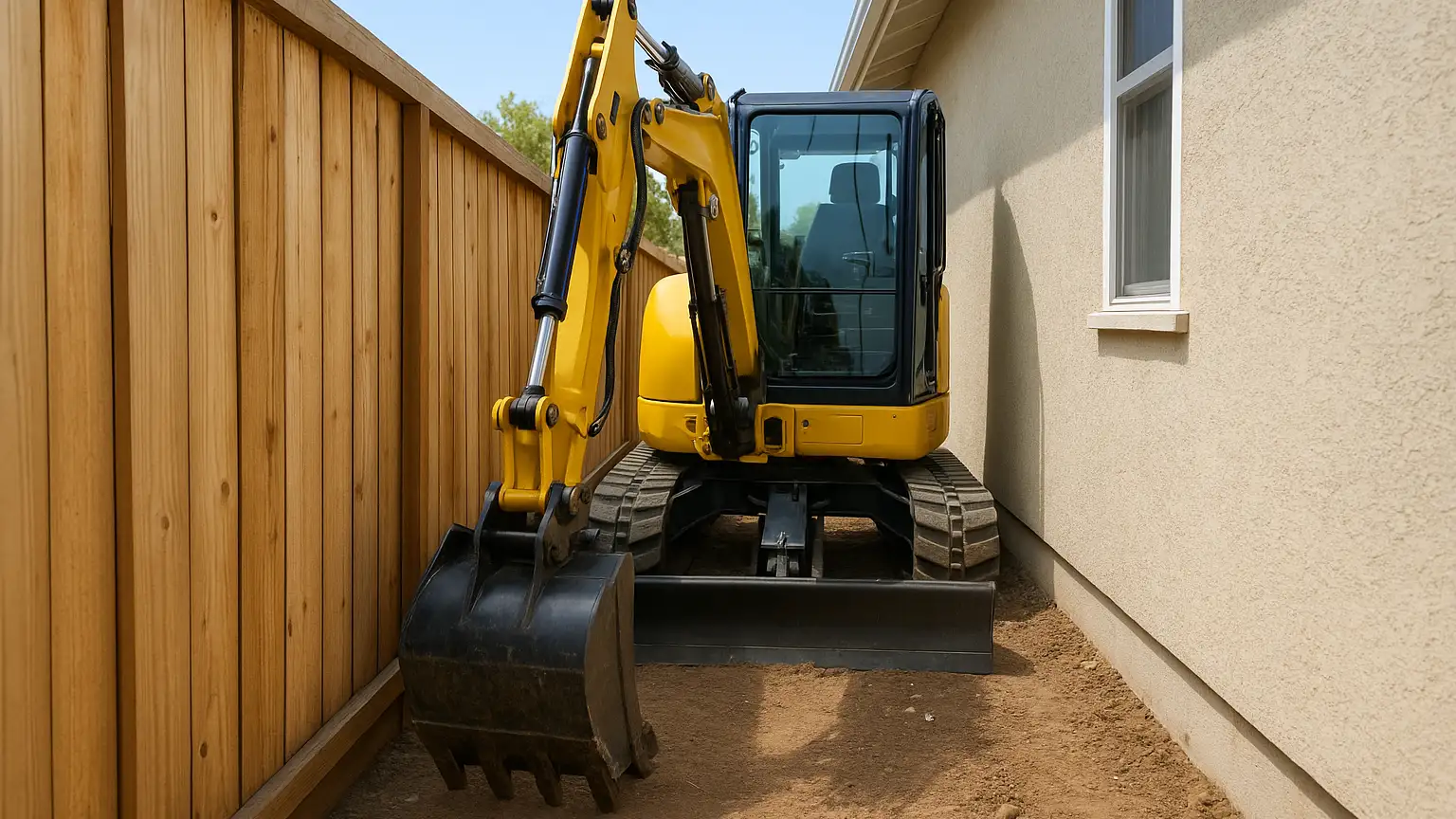
In part one, access was a scheduling question. After a remodel, it becomes a demolition question. There are only so many ways to get an excavator and thousands of pounds of material into a backyard now ringed by finished surfaces.
Route One: Through the Side Yard
The cheapest path, when it exists. A side yard of eight feet or more usually accommodates a compact excavator and a track loader. Expect to remove a fence section, protect or replace whatever surface is underfoot, and accept some soil compaction. Under eight feet gets tight. Under five feet and most standard equipment is out.
Route Two: Across the Finished Patio
Sometimes the only route runs straight over the work you just paid for. Crews can lay steel road plates or heavy plywood cribbing to spread the load, which protects pavers reasonably well and poured concrete less reliably. Concrete under four inches with light reinforcement tends to crack under tracked equipment no matter how carefully it is done.
Route Three: Crane the Equipment In
Where there is truly no ground route, a crane lifts a mini excavator over the house. It works, but it adds cost, needs street closure permits in many cities, and requires overhead clearance free of power lines and mature trees. Crews experienced with tight-lot builds, including the ones local homeowners keep recommending in roundups of the pool builders their customers keep talking about, tend to have this priced out as a standard alternate rather than an emergency scramble.
Route Four: Hand Dig and Conveyor
The last resort for courtyard lots and homes with zero side access. Spoil gets moved by conveyor or wheelbarrow. It is slow, labor heavy, and can add weeks. It is also the only method that leaves the surrounding yard essentially untouched, which occasionally makes it the cheapest option once restoration costs are counted.
Designing Around the Yard You Already Built
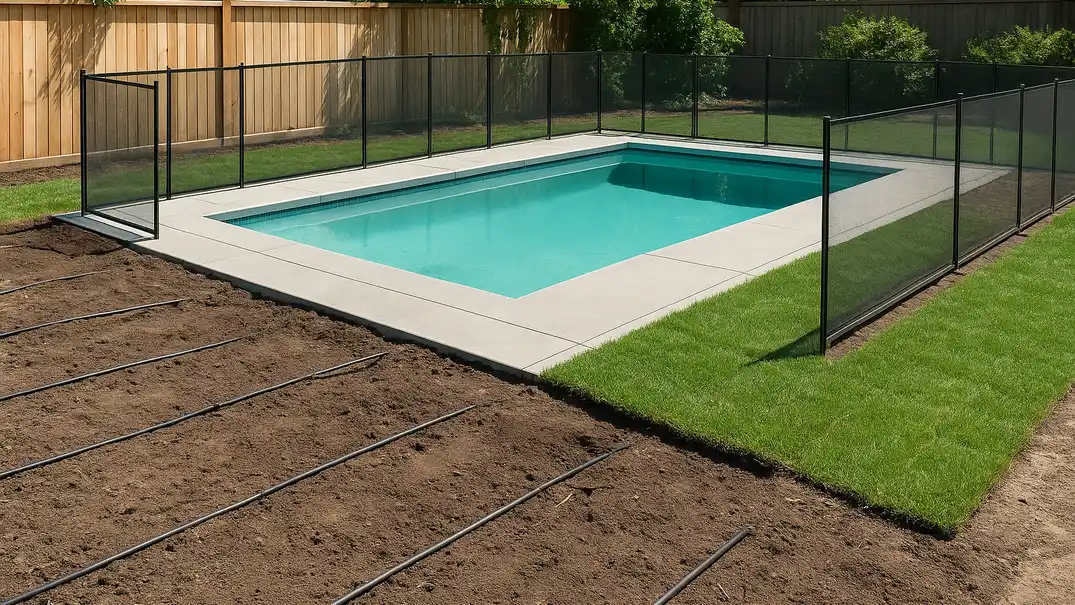
The best post-remodel pool projects do not fight the existing yard. They read it, then place the pool where the damage is lowest and the payoff is highest. A few strategies consistently reduce collateral cost:
- Move the pool, not the patio. Shifting a design eight feet can spare an entire section of hardscape. Shape flexibility is worth more than a few square feet of water.
- Put the equipment pad where the trench is shortest. Every foot of plumbing run is a foot of finished surface you cut. A slightly less convenient pad location can save thousands in restoration.
- Consider a shell that arrives finished. Fiberglass drops in as one piece, compressing the on-site window dramatically. Homeowners chasing a short build often look at whether they can go from pool by labor day? and the same speed advantage means fewer weeks of trucks parked on a finished driveway.
- Salvage and reset instead of replace. Pavers, flagstone, and dry-laid stone can often be pulled, stacked, and relaid. Label and photograph the pattern before anything moves.
- Transplant, do not discard. Established plants in the dig zone can be lifted and held in pots through construction, assuming someone is actually assigned to water them.
- Turn the seam into a feature. When new decking will never match old, a deliberate band of contrasting material, a planter run, or a change in elevation reads as design rather than repair.
Phase the Finishes, and Write the Restoration Into the Contract
One approach recommended by the team at Dolphin Pools for budget-constrained post-remodel builds is to complete all the structural and buried work in one pass, then finish surfaces later. Get the shell, the plumbing, the electrical, the conduit for future features, and the barrier compliance handled while the machines are on site. Deck upgrades, outdoor kitchens, and shade structures can follow next year without reopening the ground. The rule is simple: anything that lives under concrete gets installed now, anything that sits on top can wait. That single distinction keeps a phased project from turning into two full excavations.
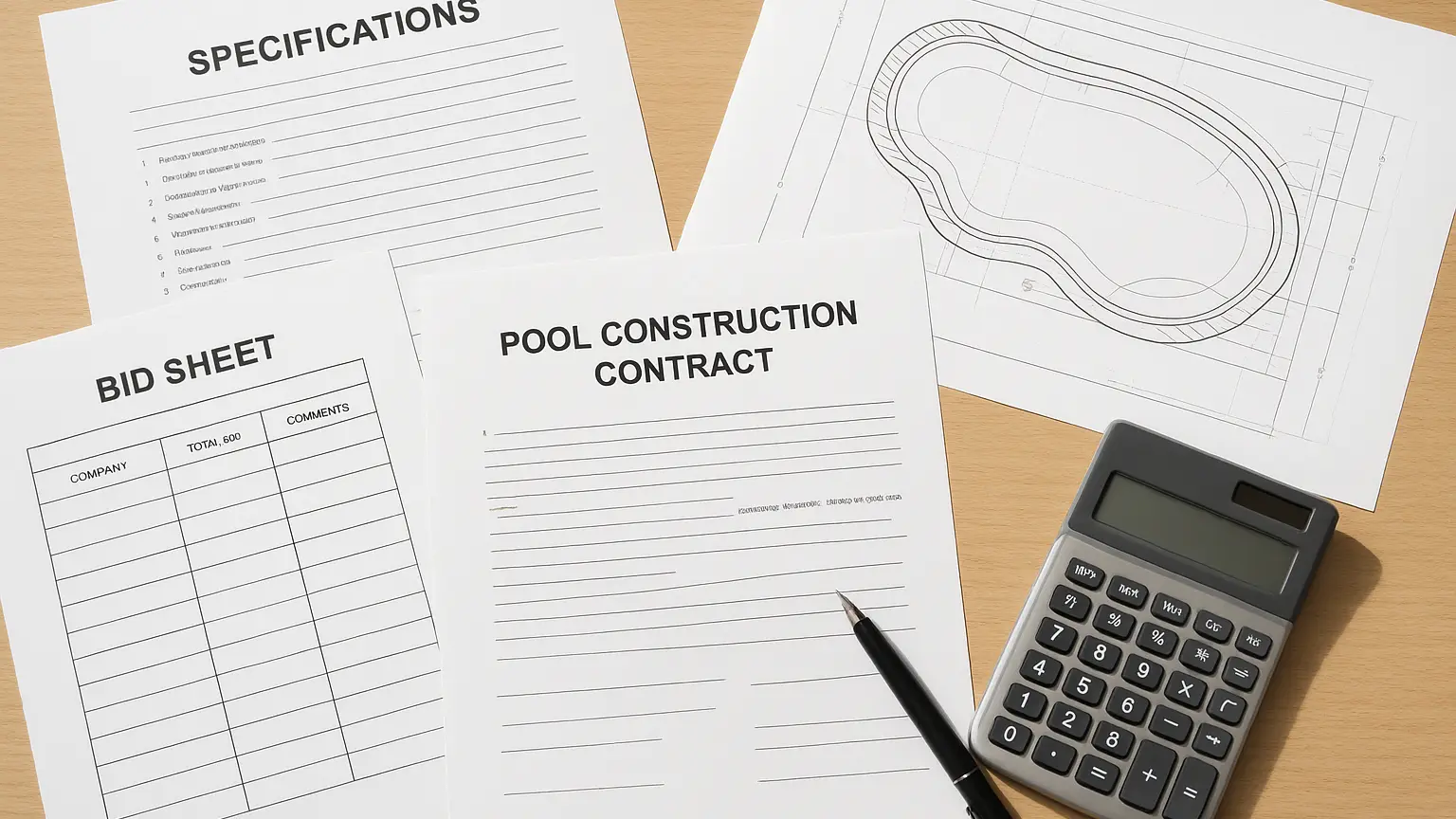
Then get the restoration specifics on paper. Which fence sections come out and who rebuilds them. Whether sod replacement is included or excluded. What happens if the paver dye lot does not match. How irrigation repairs are handled and by whom. These details are exactly the kind of thing that surfaces once one question pool contractors hope comes into focus, and they are far easier to negotiate before signing than to argue about in week six.
Water Was Always Going to Cost You Something
Adding a pool after a remodel is not a mistake. It is just a different set of tradeoffs than the ones covered when we looked at trench mistake that turns and how shared trenches change the math. Instead of coordinating two crews, you are paying to open ground you already closed. That premium is real, but it is predictable, and predictable costs can be planned, negotiated, and sometimes designed around entirely. The homeowners who get burned are almost never the ones who knew the patio had to come out. They are the ones who assumed it would not.
So walk your yard before you call anyone. Find the access route with your own eyes. Note what sits in the likely footprint and decide now what you would grieve and what you would happily trade. Then ask every bidder the same questions about restoration, matching materials, drainage, and who owns the cleanup. The next part of this series turns to the money and the calendar: how to budget realistically, how permitting actually moves, and the one contract detail that decides whether your backyard becomes a pool or a hole that sits through an entire swim season.