Your Foam Roof Is Losing Its Coating Right Now — Here's How to Spot It Before Monsoon Season
Chalking, blisters, pinholes, ponding: quiet signs your foam roof coating is spent, and what each uncoated week costs an older home before the rains hit.

Part 1 of 3 in the series Before the Foam Fails: An Older-Home Owner's Guide to Foam Roof Replacement.
A spray foam roof does not fail with a bang. It gives up slowly, one sunny week at a time, and the only real warning is a change in how the surface looks and feels underfoot. By the time a brown ring shows up on a bedroom ceiling, the coating has usually been gone for two or three summers.
This series was built with field insight from Durafoam Roofing, a team that works on aging foam constantly and sees the same story repeat: the foam is often still worth saving, but the thin coating protecting it wore off years ago and nobody was looking up.
On a house that is thirty or fifty years old, that gap matters more than it would on new construction. Decks have been patched, framing has shifted, parapets have settled and cracked. Foam ends up on low-slope decks in the first place because water leaves them slowly, and how slope changes drainage largely decides how long any surface above it lasts in Phoenix. In many cases the foam was sprayed over an existing roof, so water that sneaks in has decades of old seams to travel along before it shows itself.
Here is the part most homeowners never get told plainly. The coating is a sacrificial layer. Polyurethane foam has almost no resistance to sunlight on its own. Once the coating thins out, UV begins chewing the foam surface directly and never stops. That is the clock you are racing, and it does not pause for a busy fall.
Pick a dry morning with soft light, because catching coating loss early depends on seeing texture clearly. Harsh midday sun hides texture, and a wet roof hides everything. Then look for these five things in order:
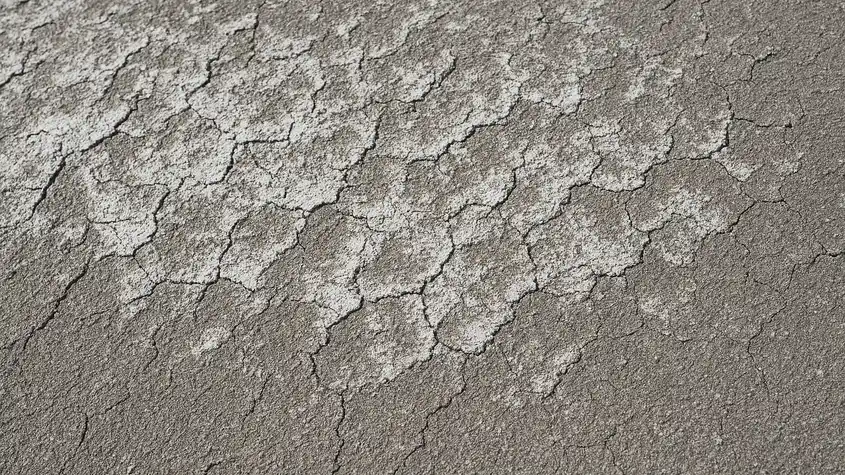
- Chalking. A fine white powder that comes off on your hand. That powder is the coating breaking down and washing away a little more with every rain.
- Thin spots and shadows. Gray or tan ghosting under the white surface, usually on the south and west slopes first, or along walking paths to the air conditioner.
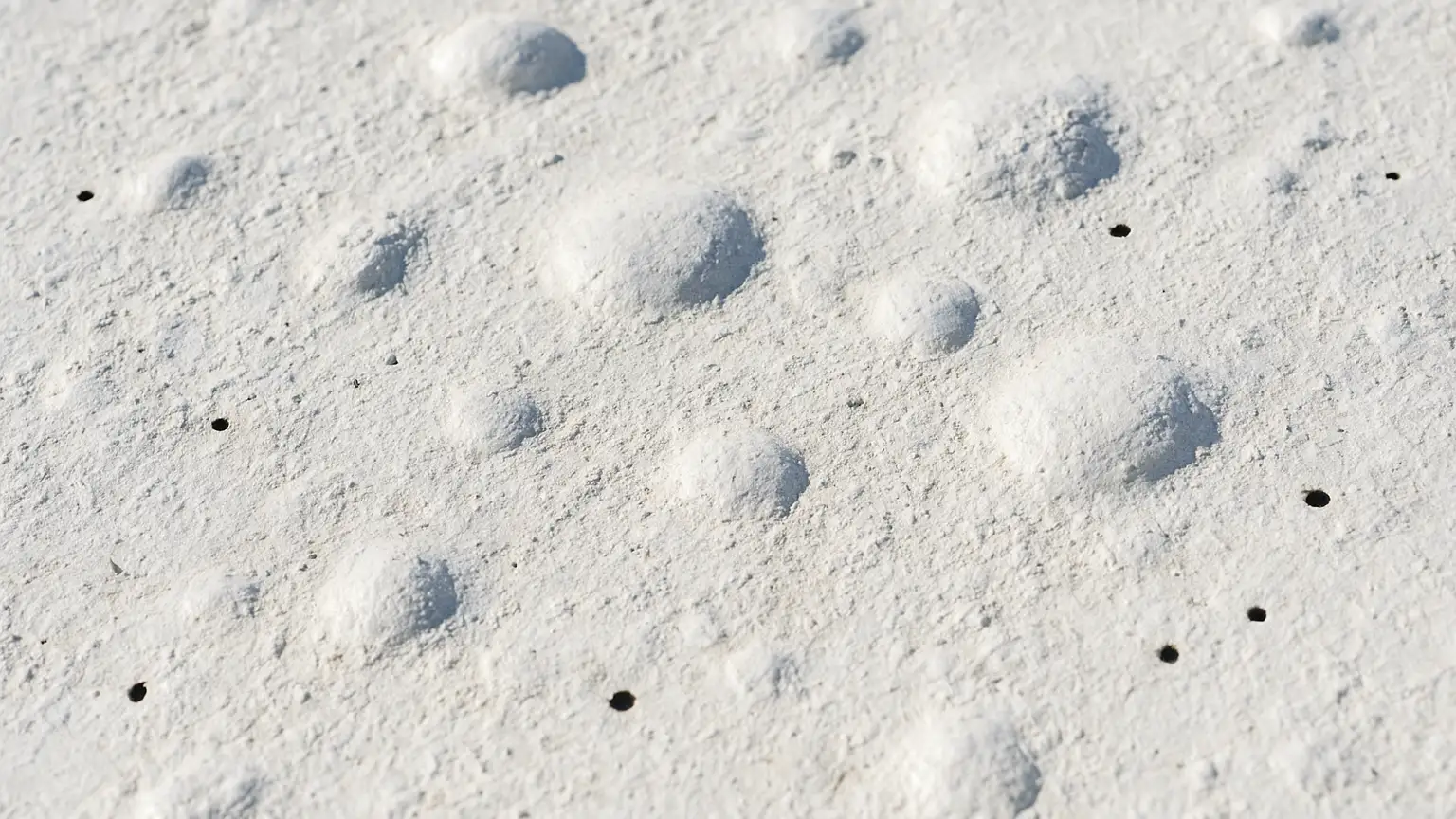
- Blisters. Raised bubbles that feel soft or crunchy when pressed. Each one is a place where the bond let go and moisture has room to sit.
- Pinholes. Tiny dark specks, often from hail or gravel tracked across the roof. They look harmless and they are not.
- Cracked details. Anywhere the coating meets a vent, skylight, drain, or parapet wall, look for hairline splits.
When Yellow Foam Shows Through
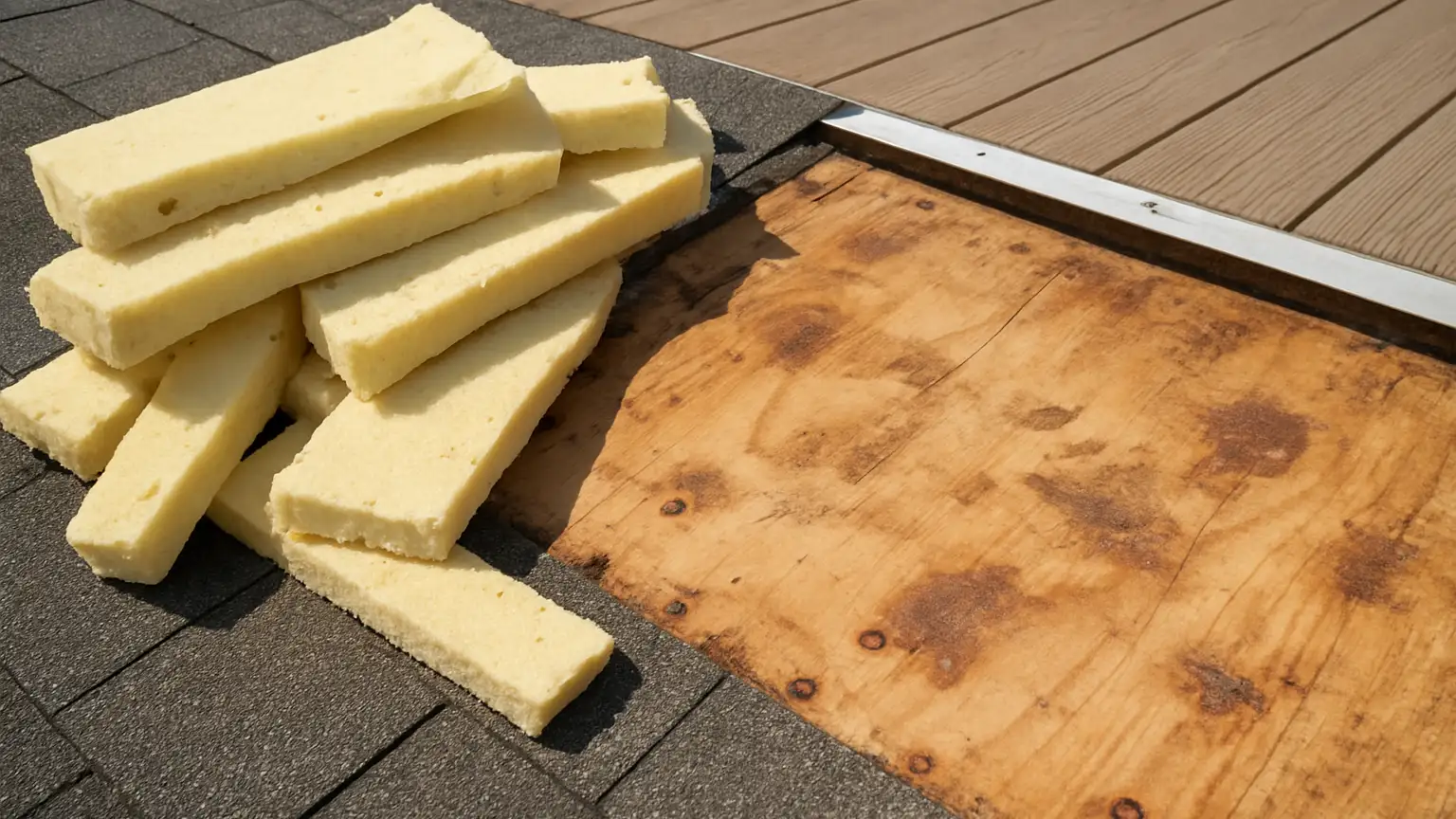
Exposed foam goes from cream to yellow to tan, then to a dark, crumbly brown that sheds like coarse sand. If you can scratch grit loose with a fingernail, that section has been bare a long while. Water entering a pinhole above that spot does not stay put either. It runs the deck slope and can surface far from the entry point, sometimes as hidden moisture damage in a wall long before the ceiling stains.
Pro Tip:
Pro Tip: Rub Your Hand, Then Check Your Palm
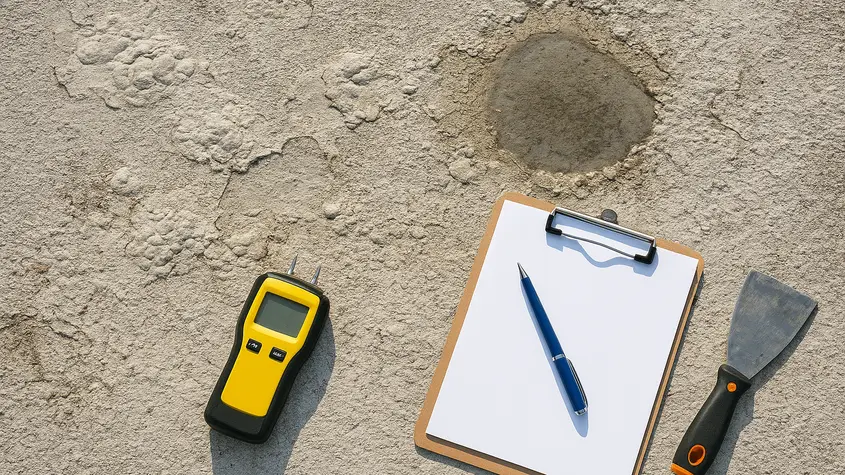
The fastest coating test costs nothing. Press your open palm flat on the surface, drag it about a foot, and turn it over. A clean palm means the coating still has body. A dusty white palm means it is actively powdering off. Gritty tan particles mean you are touching bare foam, not coating at all.
Do this in four places: the sunniest slope, a low spot, near the air conditioner, and beside a drain or scupper. Those four almost always age at different speeds, and the worst one sets your timeline.
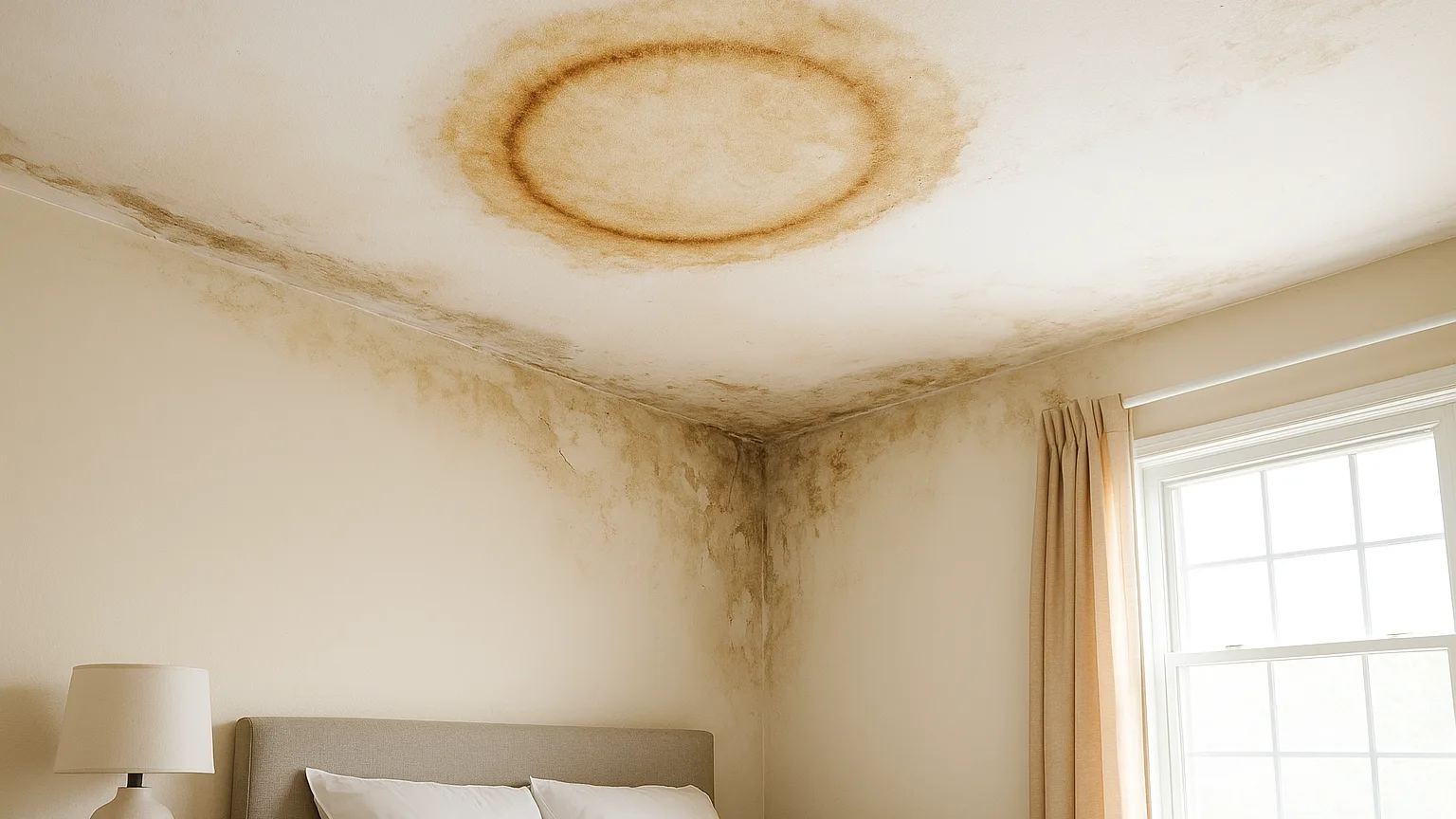
Closed cell foam does not soak up water like a sponge across the whole roof. It takes on water at the damaged spot, and that wet area creeps outward season after season. That is why a small problem stays cheap for a while and then suddenly is not. One pinhole with coating over it is a caulk-and-recoat item. The same pinhole left open through a rainy summer becomes a saturated pocket, and saturated foam has to be cut out, not painted. Recoating a sound roof is a surface job; cutting out wet foam means patch work, deck drying, and sometimes plywood or framing repair on top of it.
Ponding Water and the Slow Soak
Low spots are the accelerator. Older homes settle, and rooflines that started dead level rarely stay that way. Water that sits for days keeps the coating soft and works at every seam. This is a common trap on houses with mixed rooflines, where the difference between a flat and pitched roof section means one area drains in minutes while another holds a shallow pool for a week. Look for chalk-colored tide rings, dirt lines, or algae streaks. Those marks show where water stopped moving, and that is where damage concentrates.
<<Pro Tip:
Pro Tip: Photograph the Same Five Spots Every Month
Memory is a terrible inspection tool. Pick five locations, stand in the same place each time, and shoot a photo on the first of the month. Include something for scale, like a tape measure or a coin, next to any blister or bare patch.
Three months of photos will tell you whether a spot is stable or spreading, and that changes the whole conversation with a roofer, because a growing blister and a static one call for very different work. It also gives you real evidence if a warranty or insurance question comes up.
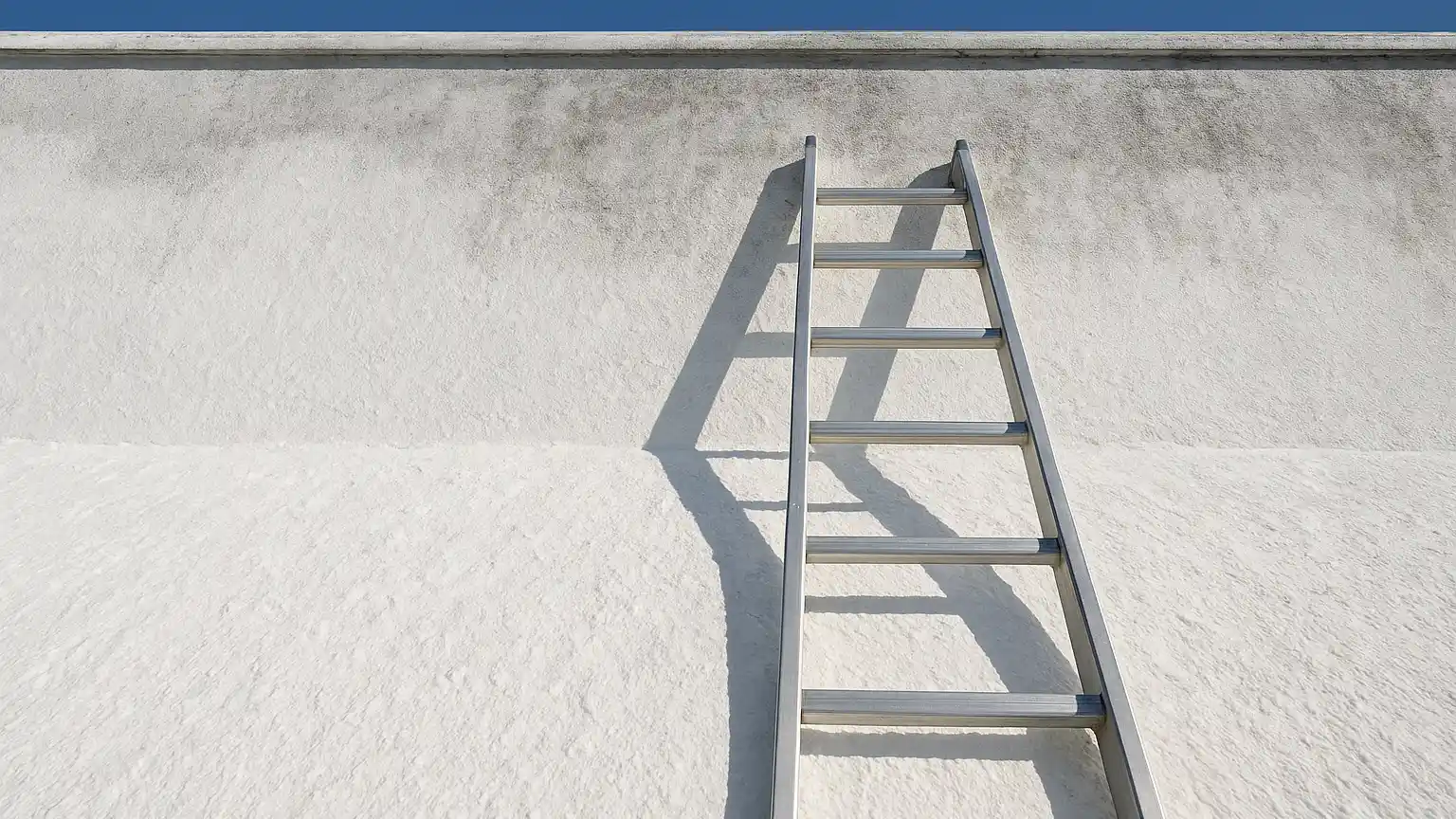
Not everyone should be walking an aging foam roof, and soft spots are exactly where you do not want to step. Plenty can be learned from the ground or the top of a stable ladder:
- Check downspout outlets and splash areas for tan foam grit washing off the roof.
- Scan the roof edge with binoculars for color changes, dark patches, and standing water rings.
- Walk interior ceilings and closet corners, looking for faint yellow halos or a musty smell in still air.
- Look at wall stains under scuppers and canale outlets, which often show trouble before the roof does.
- Write down dates. A leak that shows only in wind-driven rain points somewhere different than one that appears in every shower.
Once you know what you have, the real question arrives, and it is where most homeowners freeze. Sorting out whether you are looking at recoat or replace? waiting depends on how much moisture is trapped in the foam and how far it has spread. If the answer lands on the heavier side, the timeline matters more than the price tag, because get the foam down before is a weather-dependent job with real cure windows.
The Roof Is Telling You Something in September
Foam roofing rewards owners who pay attention early and punishes the ones who wait for proof. Chalking, thin spots, blisters, pinholes, ponding rings, and bare yellow foam are not separate problems. They are one problem at different stages, and every stage costs more than the one before it. On an older home with patched decking and a settled roofline, the jump from cheap to expensive can happen in a single rainy stretch.
Spend twenty minutes this week. Find your worst spot, mark it, photograph it, and write down what you see. If the coating is powdering, you have a maintenance decision. If foam is bare, gritty, and dark, you have a repair decision with a deadline attached. Either way, you are ahead of the weather instead of reacting to it.