The Silent Swell: What's Really Rotting Behind Your Bathroom Shutters
Bathroom shutters can quietly trap steam behind the wall for years. Here's how the damage happens, what it looks like, and how it gets fixed.
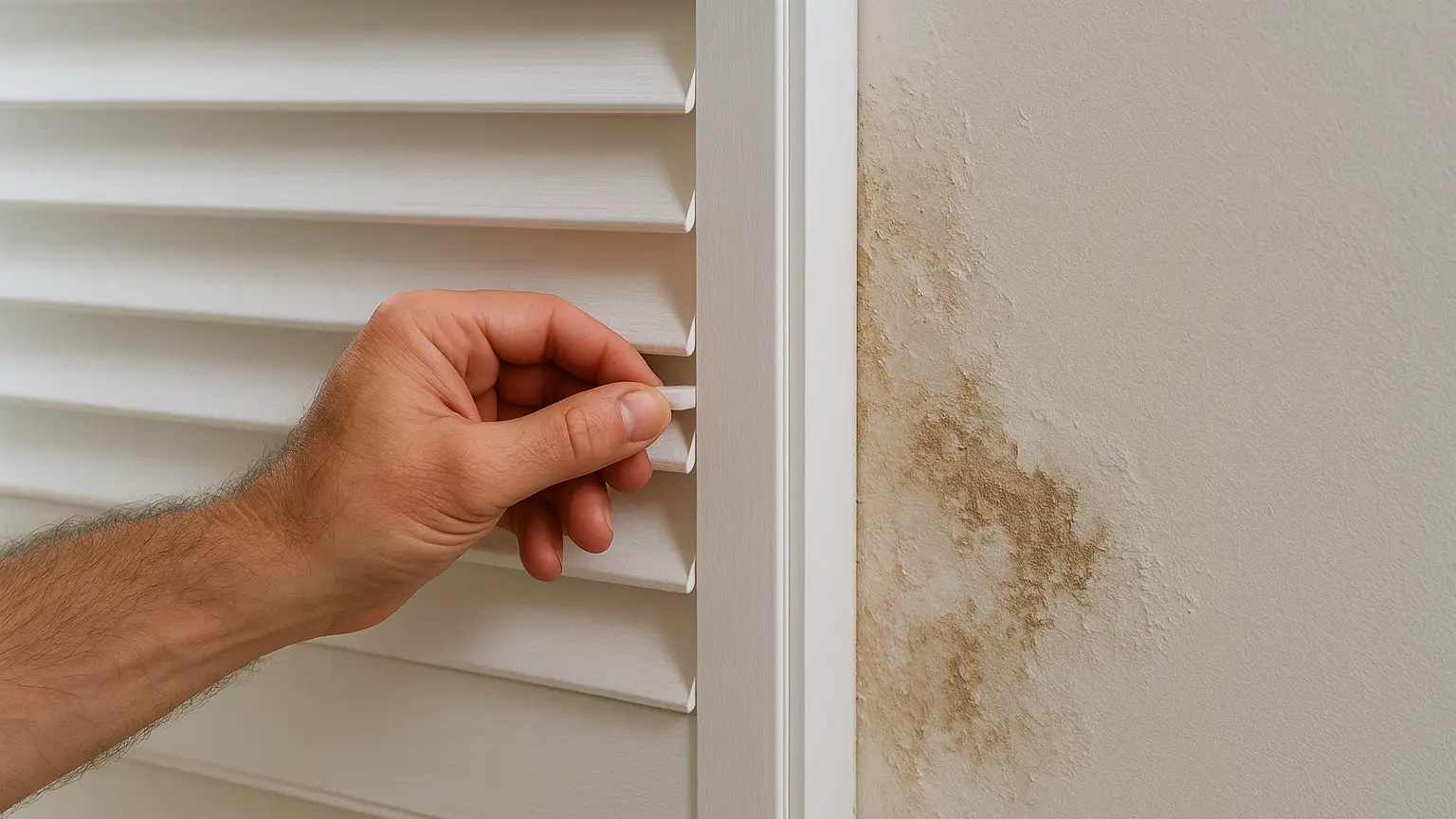

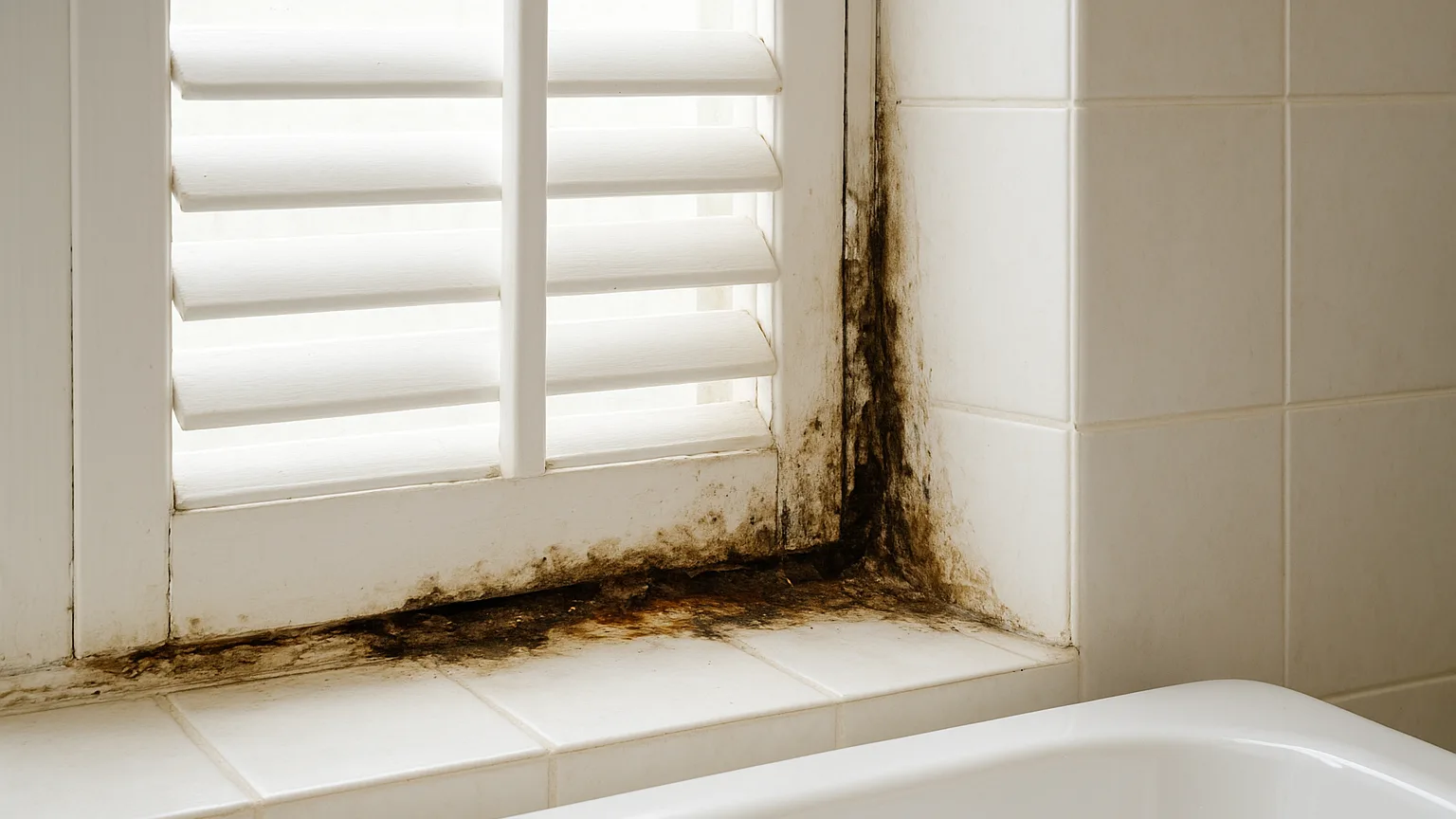
Plantation shutters look beautiful in a bathroom. They soften the light, add a custom built feel, and hide whatever is happening on the other side of the glass. But there's a version of this upgrade that quietly turns into a problem most homeowners never see coming, not until the paint starts bubbling or a musty smell shows up near the window trim.
The issue isn't the shutters themselves. It's what happens in the space between the louvers, the window, and the wall once steam from a hot shower has nowhere honest to go. Bathrooms are the most humid rooms in a house, and every surface near the window becomes a landing pad for that moisture. When the louvers are installed at the wrong pitch, mounted too tight against the frame, or built from a material that swells with humidity, that landing pad turns into a holding cell.
This is a different problem than a weak exhaust fan or a missing duct run, which causes its own set of headaches. Here, the focus is on how the shutter hardware and the wall cavity behind it interact, and why that hidden pocket of trapped humidity can quietly outlast the shutters themselves. It happens slowly, without much noise, usually behind a feature everyone assumes is practically maintenance free.

Every bathroom shutter is mounted to a frame that sits directly against the drywall or window casing. That frame gets fastened with screws that puncture the paint, the primer, and sometimes the moisture barrier hiding just underneath. Once shower steam rises and lands on the cooler louver blades, it doesn't simply evaporate back into the room air. Some of it clings to the frame, seeps into those screw holes, and starts traveling into the stud cavity itself.
The Mounting Frame Becomes a Moisture Highway
Most installers focus on the fit and the finish, not the airflow. A frame set flush against the wall with no breathing room behind it acts almost like a lid on a pot. The moisture has nowhere to escape except into the wood or drywall it's touching.
- Shutters mounted flush against the drywall with no air gap behind the frame
- Louvers tilted the wrong direction, holding condensation instead of shedding it outward
- Frame material with no humidity resistance used right next to a wet window
- Caulk run around the entire frame, sealing moisture in instead of giving it a path out
This is closely related to the louver pitch problem covered in this breakdown of how bathroom shutters can choke an exhaust fan, though the wall cavity issue often shows up even in bathrooms with a perfectly good fan running every time.
Materials Matter More Than People Think
Solid wood shutters swell and warp when they sit in a humid bathroom long enough. MDF panels are worse, since they absorb moisture and can start to crumble at the edges within a year or two. Basic vinyl shutters resist water but still trap it against the wall if the frame isn't designed to let air move behind it. The material matters, but only if the installation gives that material a chance to do its job.
Pro Tip:
Pro Tip: Ask About the Frame Before You Ask About the Color
Most shutter shopping starts with paint swatches and louver widths, which is exactly backward for a bathroom installation. The frame design and the gap behind it matter far more than whether the color matches the vanity.
"A shutter that looks perfect in the showroom can still trap moisture if the frame isn't designed to let the wall breathe," says Melissa Grant, lead product specialist at Direct Buy Blinds. "We always tell customers to check whether the louvers were engineered with a slight forward tilt and a gap behind the frame, not just whether they match the tile."
- Ask if the frame is rated for high humidity rooms, not just marketed as water resistant
- Ask whether the installer plans to leave a ventilation gap behind the frame
- Ask what caulk or sealant will be used, and where it will and won't be applied

Trapped moisture behind a shutter frame rarely announces itself right away. It usually takes a few humid seasons before anyone notices, and by then the damage has already spread through the drywall paper and into the insulation behind it. This slow timeline is exactly why the problem catches so many homeowners off guard, similar to how early decisions covered in plumbing planning for new home construction can set the stage for hidden moisture issues years down the road.
How to Check Behind the Shutters Yourself
- Open the shutters fully and press gently on the wall below the window sill, softness usually means trouble underneath
- Look for faint yellow or brown rings near the top corners of the frame, which often show up before any obvious stain
- Smell the area right after a hot shower, since a musty or earthy smell tends to appear before visible damage does
- Remove one shutter panel if possible and check the back of the frame for dark spotting or swollen wood
Fixing It Without Tearing Out the Whole Wall
A full wall repair isn't always necessary. Many cases can be handled by removing the shutter, drying the cavity thoroughly with a fan or small dehumidifier, treating any visible mold spots, and resealing with a vapor permeable caulk instead of a hard seal. When the shutter goes back up, adding a small air gap
Pro Tip:
Our related article The Borrowed Scenery Trick: Making Pool Baths Feel Like the Backyard expands on this.
Our related article One Shutter Standard, Every Unit: An HOA Cost Guide expands on this.