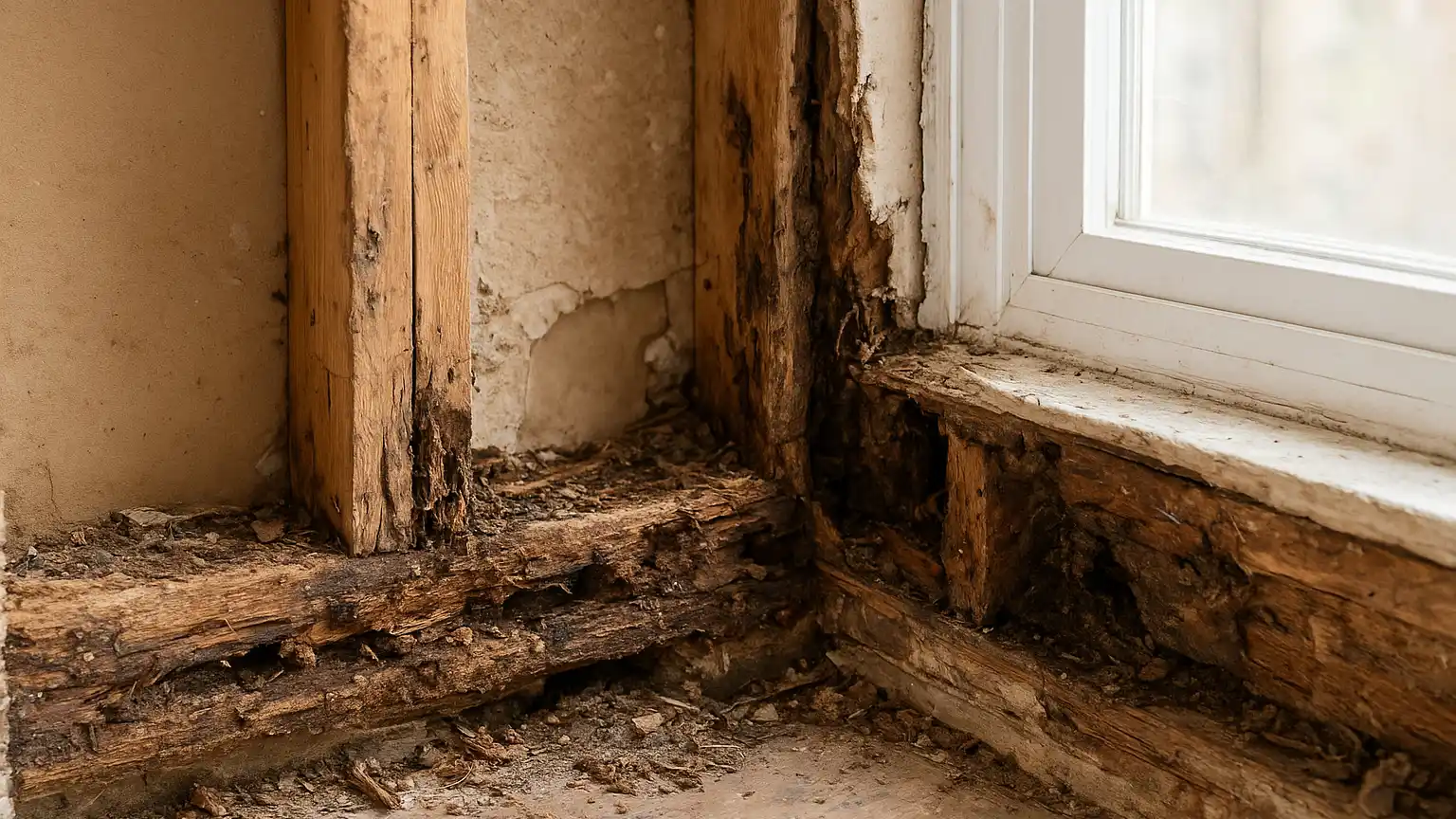
The bid said $18,400 for fourteen windows. Three days into the job, the number was $31,000. Nobody lied. Nobody cheated. The crew simply pulled the trim off the dining room window and found that the sill plate had been feeding a colony of carpenter ants since the Carter administration.
This happens constantly on houses built before 1970. It is not rare. It is not bad luck. It is the normal outcome of quoting a job where the most important information is sealed inside a wall. A window estimator standing in your living room with a tape measure is guessing at everything behind the plaster. A good one guesses well and tells you so. A bad one hands you a clean number and lets demolition day do the talking.
The fix is not finding a contractor who never issues change orders. That contractor does not exist on old houses. The fix is hiring someone who prices the unknown honestly, writes down what happens when the unknown shows up, and cannot surprise you with a number you never agreed to.
Why the Walk-Through Number Is Always Optimistic
Estimators are paid to close jobs. The visit lasts forty minutes. They measure openings, count units, check whether your siding is wood, stucco, or aluminum, and then price the part they can see: the window, the labor to set it, the trim, the caulk.
What they cannot see is whether the framing around that opening is sound, square, or even where they think it is. On a 1948 bungalow, none of those three things is guaranteed. So the estimator does one of two things. Either he builds a fat cushion into the price, which makes him lose the bid to the guy who did not, or he prices it lean and plans to catch the difference in change orders.
Guess which approach wins more contracts. This is the whole reason the cheapest window quote on your kitchen counter is often the most expensive job you will ever pay for. When people compare bids in a market like Phoenix, the ones worth letting past your door are usually the ones who ask more questions than they answer during that first visit.
The Conditions That Actually Blow Up Budgets
Five things drive the vast majority of window change orders on older homes. Knowing their names changes the conversation you have with a contractor.
- Rotted sills and studs. Water gets behind old glazing putty and failed caulk, then wicks down. The damage is almost always worse at the bottom corners and almost always bigger than it looks.
- Balloon framing. In many pre-1930s houses, studs run continuously from the foundation to the roof with no fire blocking. Cutting into that framing to widen or re-header an opening is a structural job, not a trim job.
- Out-of-square openings. Houses settle. An opening can be three-quarters of an inch narrower at the top than the bottom. A square window in a crooked hole means shimming, furring, and custom trim work.
- Buried or missing headers. Older builders sometimes spanned openings with a single flat 2x4 or nothing at all, relying on the sheathing. Discovering that mid-job means engineering, temporary shoring, and new lumber.
- Layered wall assemblies. Original siding, then asphalt shingle siding, then aluminum, then vinyl. Each layer changes the depth of the opening and the trim details, and each one costs labor to cut through.
Add lead paint to the list if the house predates 1978. Federal rules require certified containment practices during renovation, and a contractor who did not price for that is either uncertified or planning to skip it. Neither is a good sign.
Vetting an Installer Who Understands Old Construction
Window companies fall into two rough camps. One camp installs windows. The other camp does carpentry that happens to involve windows. On a pre-1970s house, you want the second camp, and you can tell them apart in about ten minutes of conversation.
Ask These Before You Ask About Price
- "How many pre-1970 homes did your crew work on last year?" You want a number, not a vibe. If they mostly do tract homes from the 1990s, their crews are fast at a completely different task.
- "Will you pull the interior trim on one window before you finalize the bid?" The best answer is yes. A single exploratory opening tells an experienced installer more than an hour of measuring.
- "Who does the rot repair, your carpenters or a subcontractor?" In-house carpenters means the work happens the same day. A sub means scheduling delays and a second markup.
- "What is your published rate for framing repair?" A real answer sounds like a dollar figure per linear foot or per hour with a materials markup. A vague answer means the price gets invented later.
- "Are you RRP lead-certified, and can I see the card?" This is a paper credential. Ask to see it.
- "Full frame or insert?" Anyone who recommends inserts everywhere without inspecting the existing frames is guessing.
The last one matters more than most homeowners realize. An insert window slides into your existing frame and keeps the old sill and jambs. It is cheaper and faster, and it is also the perfect way to seal rot inside a wall for another fifteen years. Full frame replacement removes everything down to the rough opening, which is where problems get found and fixed. On an old house, full frame is usually the honest choice even though it prices higher.
References Worth Actually Calling
Skip the glossy list of happy customers. Ask for three references where the job ran over budget, and call them. Ask each one how the overage was communicated, whether they saw photos, and whether the final number matched what they were told mid-job. A contractor who hands over that list without flinching has nothing to hide. A contractor who cannot produce one has either never done a complicated house or does not track their own history.
Check licensing and insurance directly with your state board rather than trusting a certificate emailed to you. If you have never navigated that process, the same due diligence habits that apply to construction management options on larger builds apply here at a smaller scale: verify independently, and get the coverage limits in writing.
What Goes in the Contract Before Anyone Swings a Hammer
A fixed bid on an old house is a fiction. What you want instead is a bid with defined boundaries: a firm price for the known work, and a pre-agreed price list for the likely unknowns. That way, discovery does not become negotiation while your wall is open and your leverage is zero.
Insist on all of the following in the written agreement:
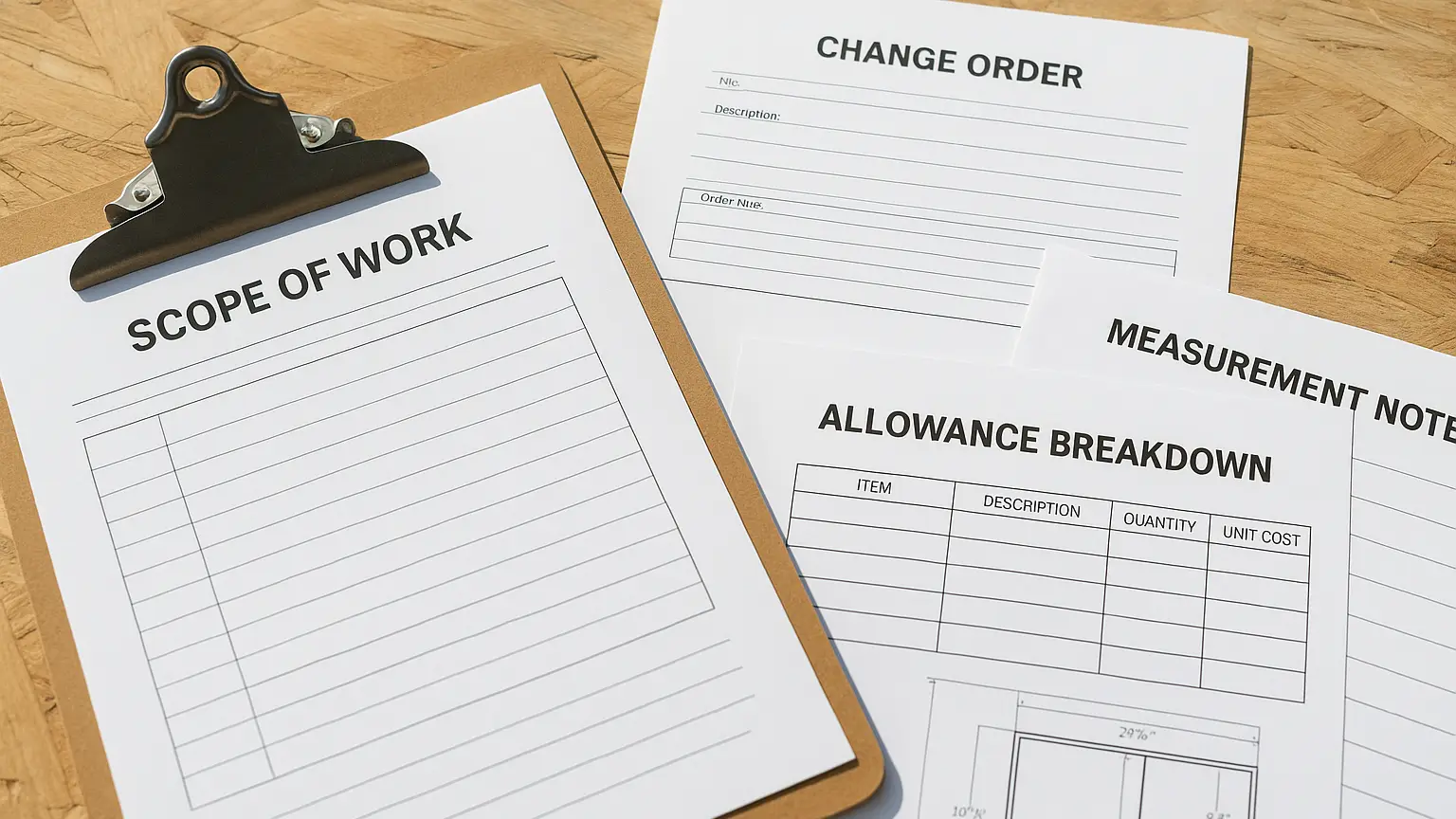
- A unit-price schedule for repairs. Sill replacement per opening. Stud sistering per stud. Header replacement by span. Sheathing per square foot. Numbers agreed to before demo.
- A rot allowance with a stated dollar figure. Something like $200 per opening built into the contract, with unused allowance credited back to you at the end.
- A photo requirement. No change order gets approved without dated photos of the condition. This single clause eliminates most disputes.
- A written approval threshold. Any single item over a set amount, say $300, needs your signature or a texted confirmation before work proceeds.
- A stop-work trigger. If total change orders exceed a percentage of the contract, say fifteen percent, work pauses for a sit-down conversation.
- Payment tied to milestones, not calendar dates. Deposit, rough-in complete, final walk-through. Never pay the bulk up front.
- Named window product and glass package. Manufacturer, series, frame material, glass coating, and grid style. Substitutions require written approval.
Structural discoveries deserve their own paragraph. If the crew finds a missing or undersized header, the contract should say who pays for the engineer's letter and whether that triggers a permit revision, a paperwork trap older homes spring on owners more often than anyone expects. On balloon-framed walls, add a line requiring fire blocking to be installed at any opening the crew exposes. It is inexpensive while the wall is open and impossible afterward.
Your Own Pre-Demolition Inspection
You do not need a moisture meter and a ladder to gather useful intelligence, though both help. Spend an afternoon walking your own house and you will predict most of what the crew finds.
Start inside. Press a thumbnail into the wood at the bottom corners of each window sill. If it dents easily or feels spongy, water has been sitting there. Look for paint that bubbles or peels only in a band along the bottom rail. Open and close each sash. A window that binds hard at one corner is telling you the opening has racked out of square.
Then go outside. Look at the siding directly below each window for staining, cupping, or a horizontal line where the finish changed. Check whether the exterior sill slopes away from the house or has flattened over the decades. A flat sill holds water, and a sill that holds water has already done damage behind it. Pay attention to which side of the house gets the driving rain in your climate. Those windows fail first, every time.
Simple Signals and What They Cost You
- Interior stains on the wall below the sill: assume sill and possibly sub-sill replacement.
- Sashes that stick at one corner only: expect shimming, furring, and custom-fit trim.
- Multiple siding layers visible at a cut edge: expect extra labor and new exterior trim.
- Basement or crawlspace with continuous studs running up past the floor framing: balloon framing, so budget for structural attention.
- A sagging line in the wall above a wide window: header problem, and this one is not optional.
Write down what you find and hand it to every estimator. Two things happen. Bids get more accurate because the estimators are pricing real conditions, and the sloppy ones reveal themselves by ignoring your notes entirely. That kind of hands-on familiarity with your own house pays off long after this project, the same way a habit of tiny toolbox summer maintenance keeps small problems from becoming five-figure ones.
Budgeting for the House You Actually Own
Set aside twenty percent above the contract price on any home built before 1970, and thirty percent if it predates 1940 or shows any of the warning signs above. If you never spend it, wonderful. If you do, the money is a planned expense rather than a crisis.
Sequence matters too. Do not schedule window replacement the same month as anything else that needs your attention and cash. Do the windows first if you are also planning siding or exterior paint, because window work damages siding at every opening. And phase the project if the budget is tight. Six windows done properly with full frame replacement and real rot repair beats fourteen windows shoved into rotten openings with a bead of caulk hiding the evidence.
The Wall Always Tells the Truth Eventually
Every old house keeps a record of every leak it ever had, and that record lives in the framing where nobody can read it until the trim comes off. Pretending otherwise is what turns an $18,000 project into a $31,000 argument. The homeowners who come through this well are not the ones who found a magically accurate bid. They are the ones who accepted that the bid was a starting point, then spent their energy on the things they could actually control: who they hired, what the paperwork said, and how much cash sat in reserve.
Ask the uncomfortable questions before you sign. Demand unit prices, photo documentation, and an approval threshold in writing. Walk your own house first so you know roughly what is coming. Do those three things and demolition day stops being the moment your project goes sideways and becomes what it should be: the moment a skilled crew finally sees what they are working with, and fixes it properly, at a price you agreed to weeks earlier.